
GIB Stopping Auckland
Master interior plastering for residential and commercial spaces.
The Foundation of a Flawless Paint Finish
GIB stopping is where craftsmanship meets critical attention to detail. Poor execution doesn't reveal itself until the final paint coat is applied, brutally highlighting joint lines, screw pops, and uneven surface textures. Flash Interior eliminates these risks before they happen. We don't cut corners on compounding ratios or rush curing times, and our master stopping tradespeople apply compound layers with architectural accuracy, ensuring your walls and ceilings achieve flawless, superior painter-readiness (Levels 3, 4, or 5), delivered with fixed-cost certainty and zero waste compound.
Level 4 & 5 Finishes
The standard of perfection. We specialize in compounding, compounding, compounding to achieve dead-flat Levels 4 and luxurious Level 5 finishes required for high-gloss architectural paints and challenging lighting environments.
Multi-Layer Compound Systems
Engineered for strength. Our tradespeople utilise premium fibre mesh and specialised compounding systems to provide superior crack resistance and joint durability in both new builds and active environments.
Textural Matching & Blending
Seamless renovation stopping. We excel at blending new GIB fixing into existing textures, flawlessly matching compounding patterns in character homes, or skimming outdated textures for modern compliance.
QA Inspection & Painter Ready
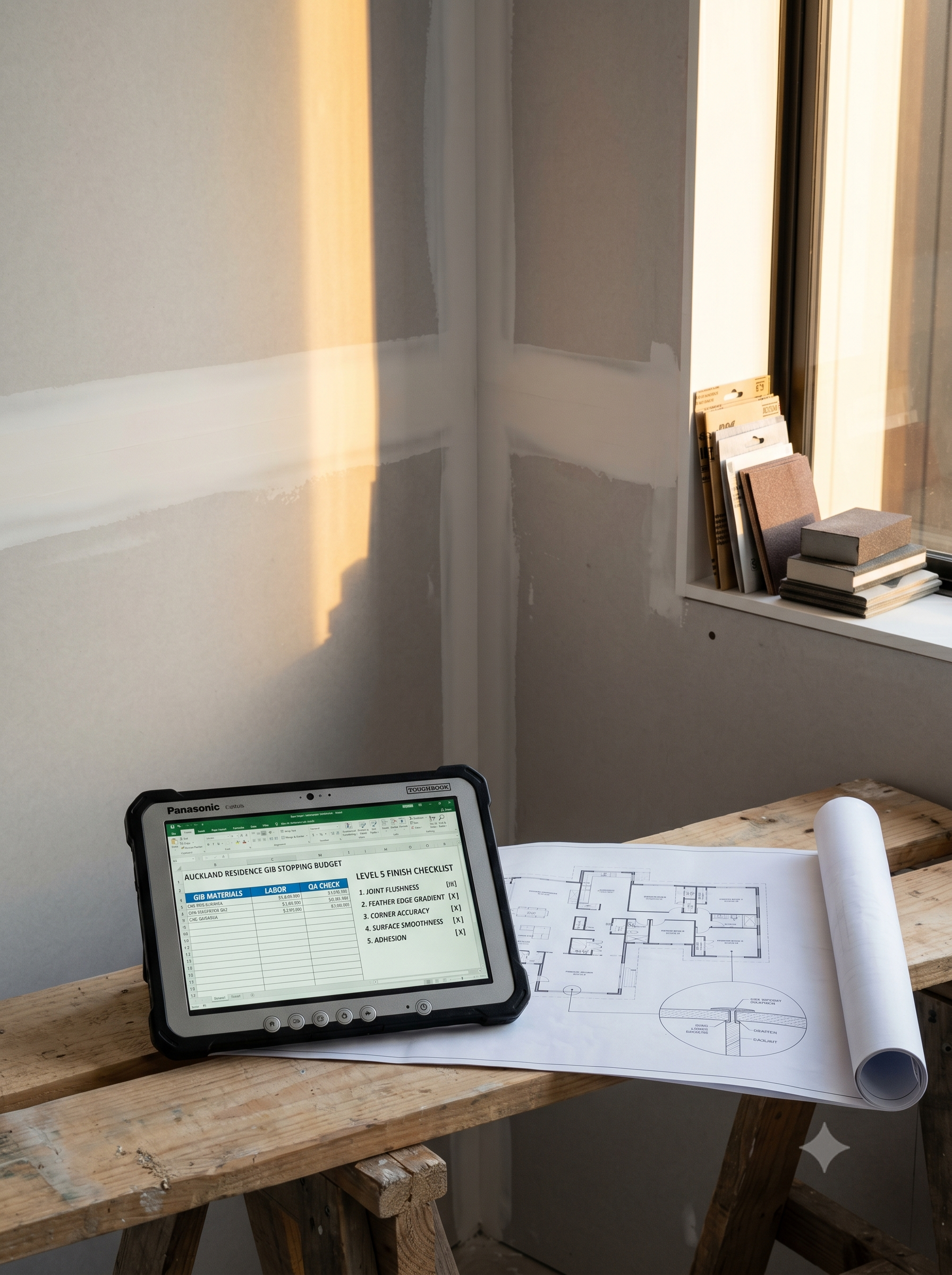
A rigorous final check. We validate surface smoothness and compliant falls before sign-off, so the substrate is perfectly paint ready with no surprises or budget variations during the final finish phase.
Our Methodology
Check the GIB lining
Make sure sheets are fixed properly, joints are tight, screws are set correctly and there are no damaged edges or movement.
Prepare joints and corners
Remove loose material, clean the surface and install paper tape or approved jointing tape to all sheet joints. External corners are fitted with corner bead where required.
Multi-Layer Application
First coat Apply base compound over joints, screw holes and corners. Embed the tape into the compound and cover fixings. Second coat Once dry, apply a wider second coat to build out the joint and reduce visible edges. Finish coat Apply a final, wider finishing coat and feather the edges so the joint blends smoothly into the plasterboard face. Sanding and inspection Allow the compound to dry fully, then sand the surface smooth. Check under good lighting for ridges, pinholes, scratches or uneven areas.
Touchup after base coat & Handover
Fill any remaining defects, re-sand where necessary and leave the surface clean and ready for and paint.